
By: Caroline
Ms. Melody Villars is an artist who spent her career making sculptures. However, she now spends her time writing calligraphy and illustrating the Bible.
Calligraphy
For those who don’t know, calligraphy is essentially elaborate writing. Ms. Villars explained that it is different from writing with an ordinary pen because calligraphy letters have thick and thin parts. She has come up with her own style after much practice.
Ms. Villars first began calligraphy in the 1990s when a friend with a massage business noted her exceptional handwriting and asked her to send out handwritten letters to the clients. This was just the beginning, as the idea caught on and many other requests for handwritten notes were asked. Soon after, she began to write poems in calligraphy as well as baptism certificates for her church.
Ms. Villars says that her favorite part about calligraphy was when she found the right pen, and says that she is “very happy now that I have found a style.” She likes that the tip of the pen is changeable, and the pen uses cartridges, which doesn’t create blobs of ink the way other pens do. For a while she used a felt tip, which she explained is great for practicing, but not good enough for jobs. Later, she found a calligraphy fountain pen, but she had to clean out the pen before use as the ink would clog. To clean it out, she had to blow air through it, spraying ink everywhere in the process. Finally, Ms. Villars decided to try dunking the pen in water as an alternative, and found that it worked just as well (but without the mess).
Blowing through the pen used to be her least favorite part of calligraphy, but after having found a solution to this problem, another presented itself: having to completely begin again on a project after any small mistake is made, as it can’t be fixed. Sometimes Ms. Villars is able to cover up the error, but she has to concentrate hard to not make mistakes, especially when writing out baptism and confirmation certificates on which names can be difficult to spell correctly.
Ms. Villars said that her favorite piece of calligraphy that she has made is Exodus 2 and 4 from the Holy Bible, which contains God’s promises to Moses. In making this, she simply continued to write the words around and around without using any guides of pencil marks.

One of her most trusted tools is her T-square ruler. It is a foot long, and she can use it to make straight lines. She also cares about what kind of paper she uses. Often, she will paint a watercolor background before adding the words, but watercolor paper creates fuzzier edges along the calligraphy. For cleaner edges, she prefers to use shinier paper, but the watercolor doesn’t come out quite as nicely on this.
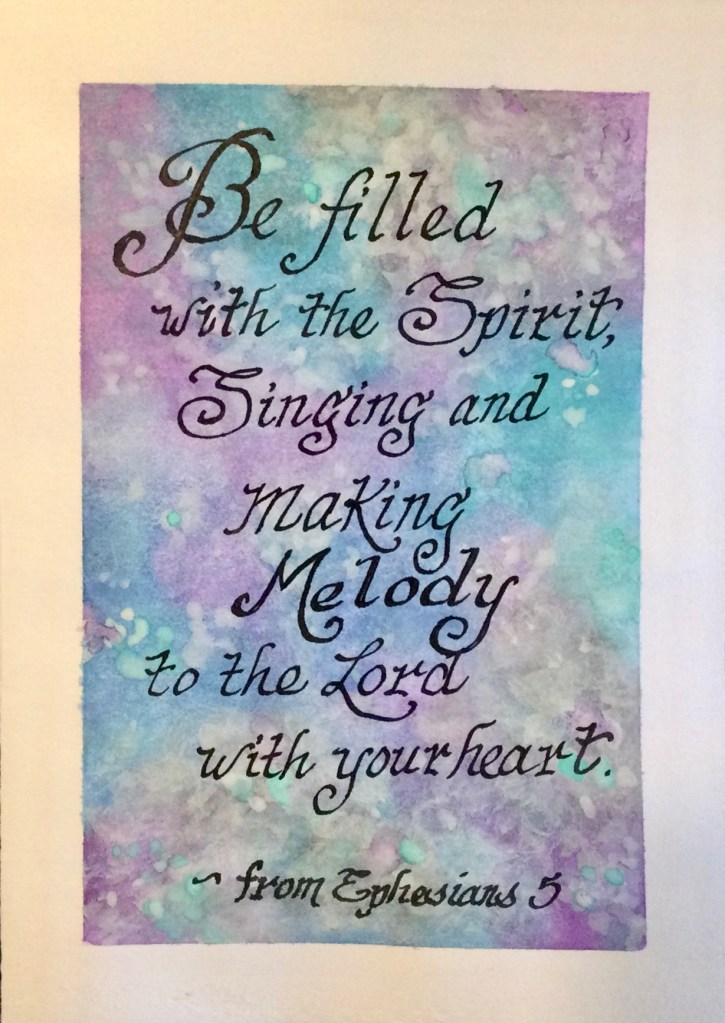

In these pictures, Ms. Villars wrote out Bible verses over watercolor. The text is slightly fuzzier due to the watercolor paper.
Illustrating the Bible
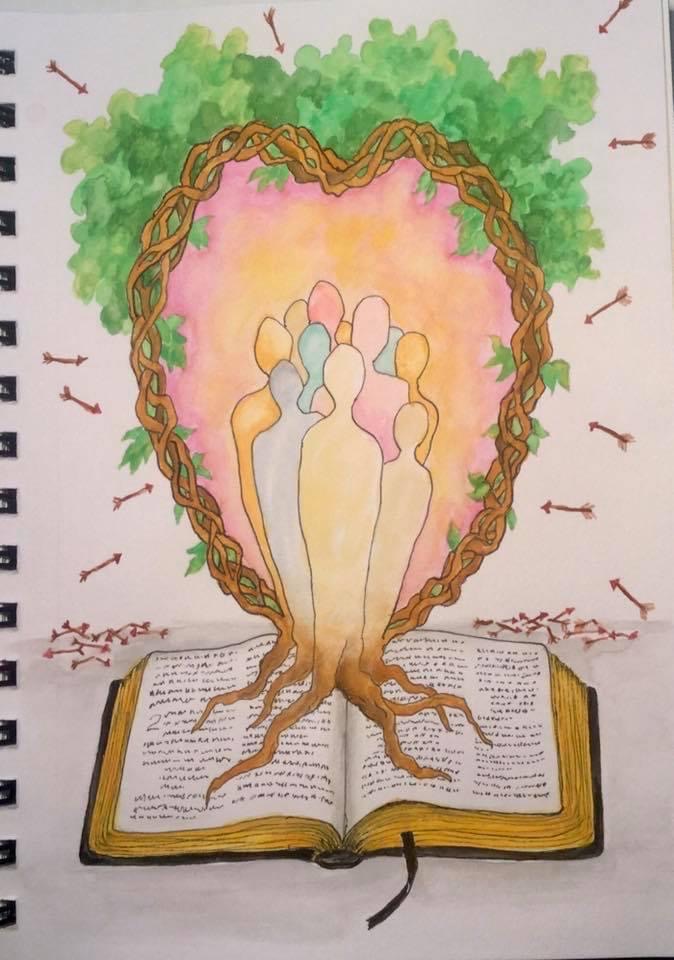
Shown above is an illustration of Colossians 2.
While much of Ms. Villars’ calligraphy is written out passages from the Bible, she also enjoys drawing out parts of it. This began with requests for her to draw illustrations for the women’s Bible study at her church. Later, after Covid hit, the church started giving out sermon-related drawing prompts to help the congregation, especially children, engage in the message. Ms. Villars often asks herself, “How would I illustrate those words into a picture?” She loves to think of ways to put an idea into a drawing, which requires more imagination than simply drawing out a scene.
She says that her favorite illustrations are always the ones she is currently working on, which right now is the book of Ecclesiastes, but she also loves an illustration from Ephesians 2 and the cover she drew for the Bible study on Jeremiah.
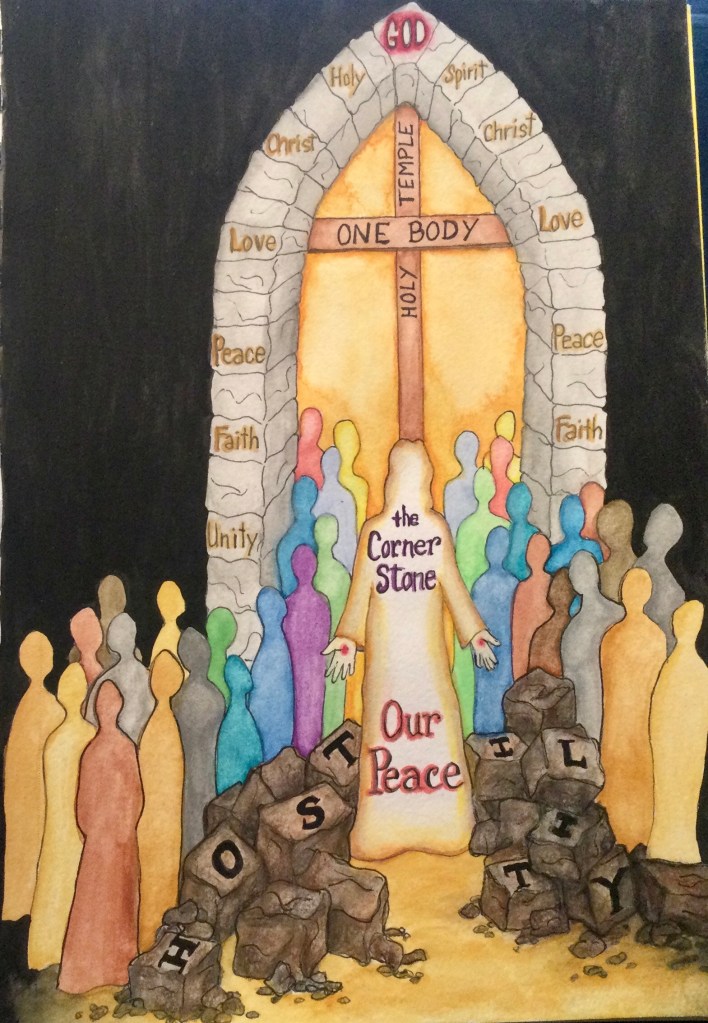
This is her interpretation of Ephesians 2. She says that she especially enjoys the dark background of the picture and the representation of Christ as the cornerstone of the Christian faith.
The three main ways of illustrating the Bible she uses are ink, colored pencil, and watercolor.
One of the pieces she made for her Bible study was a passage from Ecclesiastes written in calligraphy. Ms. Villars explained that in Biblical times there were shortages of papyrus, so people would answer a letter in between the lines of the letter that was sent, or turn the paper so that the text they were writing cut through the words of the original letter. Ms. Villars decided to replicate this style using passages from Ecclesiastes. To create an older feel, she first coated the paper with brown watercolor, and then used a darker brown along the edges. Next, she wrote out the first piece of text in brown ink, and then smudged it to make it look older. Unfortunately, the ink smudged pink instead of brown!

She decided to just go with it, and thankfully it turned out beautifully.

Ms. Villars has her own website featuring her sculptures. If you would like to see more of what she has made, you can visit melodyvillars.com.
 The Chatty Hobster